Please ensure Javascript is enabled for purposes of website accessibility

Category: Shoulder Pain

  • PT for a shoulder impingement can involve these 3 things

    PT for a shoulder impingement can involve these 3 things

    Shoulder impingement occurs when shoulder tendons and muscles rub against the shoulder bones. When shoulder pain from this issue is severe, it makes it difficult to work, play sports or do everyday tasks. If left untreated, shoulder impingements can cause further problems. 

    Physical therapists can help prevent a shoulder impingement from getting worse. They can also build you a physical therapy plan designed to ease shoulder impingement symptoms. Such a plan can focus on helping you get back to the activities you enjoy. All these benefits are possible because of the many treatment techniques a physical therapist can offer. 

    PT for shoulder impingement may involve these 3 techniques

    There are many techniques a physical therapist can use. Each of these have been extensively researched and tested to ensure their effectiveness. Your shoulder impingement PT plan may include multiple therapeutic techniques, like:

    1. Dry needling — Dry needling can help reduce pain. It can also reduce muscle tension and enhance shoulder mobility. The procedure involves inserting a sterile needle into a knot that has formed in soft tissue, which can help relieve pain quickly.
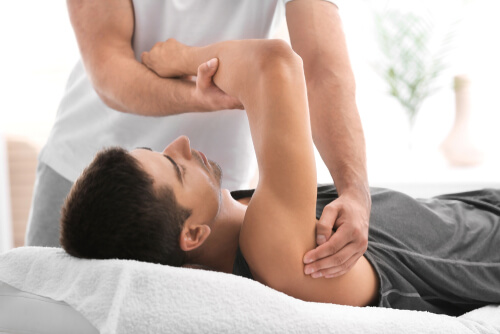
    1. Manual therapy — Through hands-on techniques, scar tissue can be broken up. Manual therapy can also reduce pain and boost flexibility in regions of the muscle that are stiff and inflamed. In addition, musculoskeletal pain is commonly treated by joint manipulations, muscle manipulations, kneading and joint mobilization.
    1. Virtual physical therapy — If there are reasons that restrict you from coming to a session, virtual physical therapy is available. During your virtual appointment, you will receive a comparable individualized treatment plan to the plan you would get during an in-person one.


    Don’t let a shoulder impingement injury control your day with pain and immobility; every day that goes by is an opportunity for the condition to worsen. PT for shoulder impingement is the answer. Get back to regular daily life activities by making an appointment with a licensed physical therapist.

    PT for shoulder impingement begins with SSOR

    Specialists in Sports and Orthopedic Rehabilitation is ready to target your shoulder impingement pain. Receive your customized treatment and free consultation that can provide results. 

    Contact us to set an appointment with one of our credentialed and knowledgeable physical therapists and get on the road to recovery. 

  • Approximately how long is the recovery time for a shoulder impingement?

    Approximately how long is the recovery time for a shoulder impingement?

    Shoulder impingement syndrome is a condition in which the shoulder’s rotator cuff muscles are pinched where they run between the humerus and the shoulder blade. Anyone who does repetitive overhead movements could develop a shoulder impingement. If you are experiencing this, you may have many questions about your shoulder impingement, including its likely recovery time.

    Shoulder impingement recovery time

    It may take as much as six months for a shoulder impingement to totally recover. Some severe impingements can take as much as a year to heal. Nevertheless, within two to four weeks, you ought to have the ability to resume your regular activities once again. A shorter recovery period can be possible for you, especially if you’re working with a physical therapist. 

    How can I ease shoulder impingement symptoms?

    You may perform light workouts to tone up your rotator cuff, and you can even do arm as well as shoulder stretching. Stretching exercises can increase the area between the shoulder blade and the humerus. This can help avoid compression of the biceps tendon, bursa, and rotator cuff.

    A few days of regularly icing or heating your affected shoulder can also help ease symptoms. There is a possibility that these and other at-home treatments may not completely ease your symptoms. If this is the case, it may be helpful to reach out to a physical therapist.

    How can physical therapy help my shoulder impingement and its recovery time?

    Physical therapy is usually a more effective option than trying to figure out which treatments to do on your own. A physical therapist can create a treatment plan based on your condition and goals. They also excel at using many physical therapy methods to help you meet goals like a shorter shoulder impingement recovery time. 

    Your treatment plan may include:

    • Pain management techniques — Your physical therapist can help you identify and steer clear of painful movements. They can also help you correct abnormal shoulder and upper back posture. They can even help you learn alternate ways of performing normal daily tasks like getting dressed. All these techniques can help ease pain and decrease the effects of your shoulder impingement. 
    • Manual therapy — Your therapist can make use of several manual therapy methods. Each of these methods involves your specialist using their hands to manipulate your shoulder. Soft tissue mobilization is designed to ease tension muscles like those of your rotator cuff. Joint mobilization is intended to help your shoulder be more mobile.

    Peak Performance offers effective physical therapy that can cut shoulder impingement recovery time 

    Are you looking for physical therapy that can shorten your shoulder impingement recovery time? Our physical therapists at Peak Performance Sports & Physical Therapy can help. They can perform a free screening on you to determine the cause of your shoulder pain. Our clinicians can also formulate a customized physical therapy plan for you that can reduce your pain and prevent it from returning. 

    Please contact us if you’re experiencing shoulder pain for information about how we can help you or to schedule an appointment with our team.

  • 6 exercises that can cut shoulder impingement symptoms

    6 exercises that can cut shoulder impingement symptoms

    Shoulder impingement is a painful condition when the rotator cuff becomes inflamed and irritated as it moves through a narrow space. This is why we recommend shoulder impingement exercises. The most common causes of impingement are an injury to the shoulder, doing activities such as heavy lifting or bone spurs. Some people may have a shoulder impingement all their lives from heredity.

    This shoulder condition can cause weakness and pain, and you might feel like your arm is hanging loose at your side. You should see a doctor immediately when this happens because impinged tendons or muscles can tear or rupture easily. Shoulder impingement exercises from a physical therapist can help you address a shoulder impingement. It can do so by stretching and strengthening your rotator cuff and other muscles surrounding your shoulder.

    6 shoulder impingement exercises that can cut your pain:

    1. Chest stretch — Stand in a doorway and place your bent elbow against the doorframe, so your upper arm is parallel to the ground. Straighten your arm, but don’t lock it. You should experience a stretch in your chest and shoulder area. Hold for 15 seconds, relax, and repeat.

    2. Eagle arms spinal rolls — This exercise helps stretch the chest, shoulders and upper back. When you extend your arms, your palms should be at shoulder level facing each other. Clasp your hands together in front of your chest if you can, but don’t force it if it’s too complicated. Roll your shoulders forward twice. Then roll them backward twice. Finally, rotate your shoulder blades in a big circle, first clockwise, then counterclockwise.

    3. Internal rotation with resistance band — Attach a resistance band to an immovable object such as a fence or pole, and then place the other end around your elbow. Your palm should be facing in while doing this exercise. Now move your arm inward, away from your body until it is at a right angle with the band taut. Wait for two seconds and return to the starting position.

    4. Seated twist — Sit in a sturdy chair with your feet flat on the floor. Set your left hand on the outside of your right knee and press down slightly to stabilize yourself. Now slowly turn your body toward your right while holding your lower back straight; then return to the center. Repeat 15 times in each direction. This stretch helps you stay loose between sets.

    5. Doorway shoulder stretch — Stand in a doorway with one arm extended up at the height of your shoulder. Place the other hand on your hip to stabilize yourself. Then lean forward by hinging at the hips until you feel a stretch in your shoulders and arms. Hold for 15 seconds, relax, and repeat three times per side.

    6. Wall sliding exercise — Stand about 2 feet away from a wall with the backs of both hands resting against it. Walk backward so that your butt is touching the wall, and slide both hands down until your elbows are as close to 90 degrees as possible.. Make sure you keep an arch in your lower back throughout this exercise.

    The shoulder impingement exercises mentioned above are simple to do with minimal equipment like a resistance band. They can also help cut shoulder impingement symptoms. Shoulder impingement symptoms may be reduced quickly if you do these shoulder impingements exercises correctly. Not sure if you’re doing them correctly? A physical therapist can help ensure that your form and execution are spot on.

    Franklin Rehab offer effective physical therapy for a shoulder impingement

    Are you looking for physical therapy that complements your shoulder impingement exercises? Franklin Rehabilitation has physical therapists who can treat your shoulder pain. To determine the cause of your shoulder pain, we can perform a free screening. Moreover, our therapists can design a customized physical therapy plan for you that focuses on reducing your pain and preventing it from returning. 

    Contact us for more information or schedule an appointment with our team if you suffer from shoulder pain.

  • Can a PT clinic help with shoulder injuries from car accidents?

    Can a PT clinic help with shoulder injuries from car accidents?

    In car accidents, shoulder injuries are common. The shoulder joint is where the upper arm bone (humerus) joins the collarbone and shoulder blade (scapula). This ball-and-socket joint is susceptible to dislocation, which can occur during a car accident. 

    Shoulder dislocation injuries from a car accident can also lead to other issues. Tears can occur in the ligaments surrounding a dislocated shoulder. They can also lead to chronic instability, which can cause pain, weakness and difficulty moving the arm. 

    In some cases, surgery may be required to repair a damaged shoulder. Fortunately, physical therapy can help patients recover following shoulder surgery. It can also be a surgery alternative for people with less severe shoulder injuries. 

    How can physical therapy help shoulder injuries from car accidents?

    Physical therapists can treat patients with a shoulder injury from a car accident by using various techniques and exercises. A few physical therapy modalities that can help treat such injuries include: 

    1. Rotator cuff strengthening exercises — Physical therapists often use exercises to help strengthen the rotator cuff muscles after a shoulder injury. These strengthening exercises are part of a common PT technique called therapeutic exercise. Strengthening exercises can be vital for regaining your ability to lift things and do other normal activities. 
    1. Joint mobilization — A shoulder injury can create other joint issues. For instance, they can cause scar tissue to form in your shoulder. As a result, your shoulder can become stiffer. Joint mobilization involves a physical therapist manipulating the shoulder with their hands. This technique can help to overcome shoulder pain and stiffness. It can also help to increase the range of motion in the shoulder joints and promote faster recovery from shoulder injuries or surgery. 
    1. Heat and cold therapy — Both heat therapy and cold therapy could also be something your physical therapist recommends using at home. These techniques can have several benefits for those with shoulder injuries from a car accident. Heat therapy can help to loosen up shoulder muscles. It can also help reduce pain by increasing blood flow to the injured shoulder. 


    Cold therapy can also offer multiple benefits for your injury. It can help reduce swelling and inflammation in the shoulder area, which may help prevent more damage from occurring to the shoulder joint itself. Cold therapy can also be helpful for easing pain.

    Find effective physical therapy for shoulder injuries at Peak Performance

    Our Peak Performance physical therapists offer treatment methods and techniques intended to help manage the symptoms of a shoulder injury from a car accident. We can bring these treatment options together to create a customized plan of care for you.  

    Ready to get our help with your shoulder injury? Contact us today to schedule your free screening.

  • 3 physical therapy exercises that can help your biceps tendinitis

    3 physical therapy exercises that can help your biceps tendinitis

    Biceps tendinitis is a painful injury, caused by microscopic tears in the tendons that connect the biceps muscle to the bone. This can come about as a result of repetitive motion, such as those done by competitive athletes like tennis or baseball players. Symptoms of a torn biceps tendon include:

    • Pain at the shoulder or elbow — This can be a sharp, sudden pain as well as a dull ache. The pain is often accompanied by tenderness and bruising at the shoulder or elbow.
    • Weakness — The arm may feel weak, making simple activities such as overhead lifting or even just raising the arm over the head difficult.
    • Difficulty rotating the arm — It may become difficult and possibly painful to rotate the arm from a “palm up” position to a “palm down” position. For example, pain may be experienced when attempting to turn a screwdriver or other hand tool.

    Can physical therapy exercises help with biceps tendinitis?

    Moderate to severe cases of biceps tendinitis often require surgery to remedy. Physical therapy is often prescribed to help the muscles recover and regain their strength and flexibility after surgery, with great results. Here are three physical therapy exercises to help with biceps tendinitis:

    • Biceps stretch — Stretching the biceps muscles can help keep them from tightening and becoming more painful. To do this simple exercise, stand 6 inches away from the wall, facing the wall. With your palms down, raise your injured arm and touch the thumb side of your hand to the wall. 

    Keeping your arm straight, turn your body away from your arm until you begin to feel a stretching sensation in the biceps. Hold for 15 seconds, and then rest. Repeat this exercise three times daily.

    • Flexing and extending — This exercise will help keep your injured arm flexible. Slowly bring the palm of your hand to your shoulder, bending your elbow as much as you can. Then, slowly straighten both your arm and elbow back out again. Repeat this biceps tendinitis exercise 15 times before resting, and then finish with another set of 15 repetitions.
    • Forearm twists — Forearm twists help the tendon glide smoothly along the biceps muscle, as well as increasing flexibility. Let your arm hang at your side. Then, slowly bend your elbow at a 90-degree angle. Turn your palm so that it faces up, holding this position for five seconds before resting. Repeat this motion 10 times, resting in between each twist. This exercise can be repeated three times per day.

    Continuum Wellness can help you address the symptoms of biceps tendinitis

    Physical therapy is paramount to helping athletes or others suffering from biceps tendinitis to fully recover. Our licensed Continuum Wellness physical therapists can help you determine the right course of physical therapy to help with your injury, including biceps tendinitis exercises and other forms of PT.

    Our physical therapists are dedicated to sports medicine and focused rehabilitation based on your performance and recovery needs. They will do a complete evaluation and design a treatment plan targeted to your injury. 

    Contact our team today for more information about our sports injury treatment services or to schedule an initial appointment. 

  • How can physical therapy help a full thickness rotator cuff tear?

    How can physical therapy help a full thickness rotator cuff tear?

    Physical therapy can certainly help your full thickness rotator cuff tear. Typically, it’s used to help patients prepare for rotator cuff repair surgery. It can also be an awesome addition to your post-surgery recovery process. Read on to learn more about this condition and how physical therapists can work with you to address it.

    Why choose physical therapy for your full thickness rotator cuff tear treatment?

    A full thickness rotator cuff tear is when a rotator cuff tendon or muscle is torn completely through. Physical therapists have great skills that can help patients with this condition.  

    Physical therapy can also help patients meet three common recovery goals: to decrease pain, to increase mobility, and to increase strength. To begin with, your physical therapist will assess your range of motion and joint stability. They will also assess your muscle strength and endurance as well as the severity of your symptoms.

    Once they have assessed these parameters, they will determine which treatment techniques may be most helpful for you. 

    3 techniques physical therapists can use to treat full thickness rotator cuff tears

    Physical therapists can use many different modalities to treat your injured rotator cuff. These modalities may include techniques like: 

    1. Manual therapy — Many people also refer to this PT type as hands-on therapy. The reason is that manual therapy involves physical therapists using their hands to manipulate and mobilize the injured area. It can be used during physical therapy sessions to loosen up tight muscles and tendons before or after an injury. This can help reduce pain and increase movement in the shoulder.
    1. Range-of-motion exercises — These exercises are important for keeping shoulder joints flexible and strong, which can help prevent further injuries caused by stiffness and weakness. They can also help people regain the range of motion that was lost during surgery. Range-of-motion exercises are often done in combination with other therapeutic exercise types, like strengthening exercises. 
    1. Muscle strengthening exercises — Strengthening your shoulder muscles can help you regain control over your shoulder movements. That’s a key benefit for people who have a full thickness rotator cuff tear. Building strength in the shoulders can also improve posture. In addition, it can prepare you for more demanding shoulder movements, such as weightlifting or lifting objects over your head.

    Find the help you need to recover from a full thickness rotator cuff tear at Rehab Access

    Our Rehab Access physical therapists can help you recover from a full thickness rotator cuff tear. They can do a free screening on you to determine how much work your shoulder will need before or after surgery. They can also build you a unique physical therapy plan intended to ease your symptoms and help prevent them from coming back.

    Contact our team today to learn more about our full thickness rotator cuff tear treatment services or to set up a free screening.

  • How to sleep more comfortably with frozen shoulder

    How to sleep more comfortably with frozen shoulder

    A frozen shoulder is a painful condition where inflammation and swelling in the shoulder joint prevents a complete range of movement. This loss of movement is accompanied by pain and stiffness that gets worse over time. Frozen shoulders can sometimes take months or even years to return to normal. While this process can be made easier through the use of physical therapy and other forms of pain relief, some people may have a difficult time sleeping due to their discomfort.

    How should I sleep with a frozen shoulder?

    Many people may find it uncomfortable and difficult to sleep with a frozen shoulder. But a lack of sleep will not only make you feel tired and groggy during the day, it could actually make your aching shoulder feel worse. Studies have shown that the loss of even one night’s sleep can increase the levels of inflammation in the body. 

    Luckily, there are a few things physical therapists can suggest that can make it easier to sleep with a frozen shoulder.

    • Sleep on your back — Sleeping on your back can help prevent you from putting a lot of weight on your painful shoulder. This position is easy and comfortable for most people to keep throughout the night, and it can also help prevent back and neck pain.
    • Use extra pillows for support — Having extra pillows around you can prevent you from accidentally rolling onto your frozen shoulder while you sleep. Placing a cushion underneath the affected shoulder or arm may also help avoid putting any strain on the area.
    • Stretch your shoulder before bed — A physical therapist can teach you light stretches and exercises that you can do at home before bed. These can help keep your shoulder more mobile and flexible as you sleep.
    • Use a heating pad before bed — Direct heat can help improve the blood flow to your frozen shoulder, relieving pain and helping keep the muscles more flexible.

    Physical therapy from SSOR can help manage the symptoms of a frozen shoulder

    Living with a frozen shoulder can be a long and uncomfortable process. Thankfully, our team of trained physical therapy specialists at SSOR are well equipped and ready to help you manage your symptoms. 

    We employ a number of methods to help reduce shoulder pain and increase mobility for patients suffering from a frozen shoulder. Some of these include manual therapy, therapeutic exercise, and dry needling, among other effective and proven techniques.

    Contact us today for more information or to schedule an initial appointment.

  • How can you injure your shoulder internal rotation muscles?

    How can you injure your shoulder internal rotation muscles?

    Your shoulder internal rotation muscles are also called rotator cuff muscles, and they help you rotate your shoulder to allow you to do things like reach for something in front of you. 

    An injury to your shoulder internal rotation muscles can be caused by many different things. One common cause is repetitive overhead or cross-body motions. Another of the most common causes of this shoulder injury is a poor posture, which can lead to chronic pain. 

    Tight pectoral muscles and rounded shoulders can also play a role in injuring these shoulder muscles because they make it difficult to bring the arm forward in front of the body. When the arm is lifted overhead a lot, these tight muscles can also cause stress on the rotator cuff muscles and result in overextension or tearing. 

    Any of these issues can trigger an injury in one or more of the shoulder internal rotation muscles. Fortunately, physical therapy can help people address these shoulder injuries. 

    2 treatment options physical therapists can use for shoulder internal rotation muscle injuries

    Physical therapy can be an effective way to treat the internal rotators of the shoulder. Part of the reason it can be effective is the wide range of treatment options that are at a physical therapist’s disposal. Some of the techniques your physical therapist may use for your injury include: 

    1. Manual therapy — A physical therapist can use their hands to help ease your injury symptoms. The hands-on treatments that they can use are collectively called manual therapy. Soft tissue mobilization and joint mobilization are two manual therapy methods that are often used to address shoulder injuries. Some of the benefits they can offer include: 
    • Breaking up scar tissue that has formed in the injured muscle. 
    • Improving blood flow to the area.
    • Slashing your pain. 
    • Boosting shoulder flexibility and mobility.
    1. Therapeutic exercises — Some key goals when treating rotator cuff injuries are improving flexibility, strength and posture. Physical therapists can use a variety of therapeutic exercises to help you reach these goals. 


    For instance, they can prescribe stretching exercises to help keep the muscles limber. These movements can also help prevent the muscles from becoming so tight. Strengthening exercises can also be used. These can help ensure that the muscles are strong enough to support shoulder internal rotation movements. They can also ease the strain on other parts of the shoulder joint, such as tendons, ligaments and bursa sacs. 

    Find effective shoulder muscle injury physical therapy at Peak Performance

    Our Peak Performance SPT physical therapists can offer treatment methods and techniques intended to help manage the symptoms associated with a shoulder injury. Our physical therapists can create a customized plan of care designed to help ease the pain. This plan will be designed to meet your specific needs and recovery goals, and it can even help you avoid future shoulder issues.

    Contact us today to schedule your free screening to determine the best plan of action for your injured shoulder.

  • 3 ways physical therapists can help muscle spasms in your shoulder

    Research shows that up to 26% of people have shoulder pain at any given time. When your pain is being caused by muscle spasms in your shoulder, physical therapy is one effective way to address it. 

    For one thing, physical therapists have extensive training in the structures of your body, including the muscles. They also excel at building treatment plans for muscle spasms in your shoulder that include a combination PT techniques. Also, your plan can be fitted to your needs. This increases the plan’s chances of helping to reduce pain, improve movement and increase blood flow to the affected area. Read on to learn some causes of shoulder muscle spasms and how physical therapists can help treat them.

    What causes muscle spasms in the shoulder? 

    Muscle spasms in the shoulder can be caused by a variety of factors. One of these is a current or previous shoulder injury, such as a pulled muscle in the shoulder blade area. Another common cause is muscle overuse. These factors can cause the muscles to tighten and pull on the surrounding tissues. If left untreated, this irritation can make it quite difficult to move your arm normally. It can also trigger pain.

    Other common causes of muscle spasms include: 

    • Muscle imbalances. 
    • Poor sleeping position. 
    • Arthritis or other underlying conditions. 

    3 ways your physical therapist can start addressing your muscle spasms

    1. Pinpointing the root cause of your spasms — There are multiple underlying issues that can trigger muscle spasms. Finding out which issue is affecting you is something a physical therapist can do. They can do so by comprehensively evaluating your shoulder. The clues they gather here can help them determine which issue is responsible for your condition. 
    1. Strengthening your rotator cuff muscles —Physical therapists may also recommend exercises to improve muscle tone in your rotator cuffs. These four small muscles surround your shoulder joint and help stabilize it during movement and impact. Weakness in these muscles may lead to instability and subsequent spasms in your shoulders.
    1. Easing upper body tension — Tension from poor posture, stress, or repetitive movements can cause tightness in the chest and shoulders. This tension may result in shoulder spasms as well as neck pain and headaches. Physical therapists can help you learn stretches that can reduce tension throughout your upper body. They can also use a hands-on technique called soft tissue mobilization to help you. This PT method involves the physical therapist using their hands to knead, stretch and mobilize your muscles. 

    Back in Motion can help address muscle spasms in your shoulders

    Experiencing painful muscle spasms in your shoulders? Our Back in Motion Physical Therapy team is primed to help you address your condition. They can assess you and create a plan to increase mobility in your shoulders as well as reduce your pain. 

    Contact one of our front desk coordinators today to learn more about our shoulder pain treatment options or to set up your initial appointment.

  • How should I sleep so that I’m more comfortable with shoulder arthritis?

    How should I sleep so that I’m more comfortable with shoulder arthritis?

    If you have been thinking, “How should I sleep with shoulder arthritis?,” you aren’t alone.

    Many people with shoulder arthritis cannot sleep on their sides or stomachs because of their pain. Shoulder arthritis can cause a lot of other sleep problems, too. Especially if the shoulder joint is worn, sleeping on your side will often make the shoulder feel worse in the morning.

    Trying to sleep on your back with your shoulders supported is usually the best option for those who suffer from shoulder arthritis. However, even this position can be problematic. Many people with shoulder arthritis are plagued by muscle spasms in the upper back and neck, which can make it painful to lie flat on your back for extended periods of time. People trying to figure out how to sleep more comfortably with shoulder arthritis can turn to physical therapists for help. 

    Tips physical therapists often give to their shoulder arthritis patients to help them sleep better

    Figuring out how you should sleep so that you’re more comfortable can be challenging for those with shoulder arthritis. Here are some tips a physical therapist can offer that may help you:

    • Get a new pillow — A pillow that supports the neck and head but doesn’t push too hard against the shoulders may help some people. Finding a pillow to support you without aggravating your shoulder may take some experimenting. If possible, bring home several different samples and try them out before you buy anything.
    • Put pillows around you — You can use extra pillows to hold you in a comfortable position while you’re sleeping. This can help relieve shoulder pressure and keep you from rolling onto your bad shoulder. You can also invest in body pillows for this purpose.
    • Stretch before bed — Try one called the standing arm swing. This exercise can help increase the flow of blood to the shoulder joint. Exercises such as this one can improve flexibility and mobility in your upper back and shoulders when performed as part of a pre-sleep stretching routine. To start this exercise, your arms should be by your sides as you stand tall. Engage your core and swing your arms upward. Then, return your arms to their starting positions and repeat. Keep it up for 30 to 60 seconds. 

    Other helpful tips 

    There are several other tips that can help keep your shoulders from becoming painful when you’re sleeping. You should try to keep comfortable during the day by resting your shoulders frequently. You should also try to sit in an ergonomic chair if it is available for you at work.

    Additionally, don’t sleep in awkward positions if you can avoid it, as this tends to make shoulder arthritis symptoms worse. If you do wake up in an awkward position, try gently moving your shoulder through its range of motion. This can help ease pain and stiffness, which can help you get back to sleep easier.

    Find help for your shoulder arthritis-related sleeping difficulties at Panther PT

    The question, “How should I sleep with shoulder arthritis?” can best be answered by a medical professional. That includes our team of experienced physical therapists at Panther Physical Therapy. Our PT experts can help you with shoulder arthritis in a variety of ways. The most important of these is by creating an individualized PT plan for your affected shoulder. 

    Contact us here at Panther Physical Therapy to schedule a free screening or to find out more about how we can help your shoulder arthritis.

  • 5 tips PT experts recommend for people with shoulder pain during the winter

    5 tips PT experts recommend for people with shoulder pain during the winter

    If you suffer from bad shoulder pain during winter, you need to keep your surroundings warm. Cold weather may cause your muscles to contract and swell, which can lead to painful and chronic symptoms. Moreover, cold weather also tends to reduce the flow of blood to your muscles and tendons. This can cause them to stiffen and trigger pain.

    It’s important to try different ways to deal with shoulder pain during the winter. Here are some tips PT experts may recommend:

    1. Keep getting in some exercise.

    Not moving around enough can actually lead to more shoulder pain. That’s why physical therapists often suggest staying as active as possible. For instance, they might suggest trying a variety of movements to strengthen the shoulder and increase its range of motion. These can help you stay active and alleviate shoulder pain. 

    You can also try stretching exercises that target your shoulder like the cross-body shoulder stretch. To do this stretch, push your arm into your chest and across your body. Hold this position for 30 seconds and repeat a few times for each shoulder. This can be an effective way to relieve your pain.

    1. Drink more water.

    You might not feel as thirsty in the winter as you do in the summer. Yet that doesn’t mean it’s less important to drink enough water. Many medical pros recommend that you try increasing your intake of water during the winter months to prevent shoulder pain and other symptoms. Proper hydration can also benefit your shoulder by thinning your blood, helping lubricate joints better and cutting inflammation. 

    1. Take a warm bath.

    When you have shoulder pain during winter, you can relax by taking a bath. This also allows the hot water to ease shoulder tension and boost blood flow. Both of these results can help cut shoulder pain. Don’t want to get wet? Heating pads or hot water bottles can also be used to achieve these results. If you do apply heat to your shoulder, be careful. Make sure the temperature isn’t too high as this could burn your skin. 

    1. Make your bed more comfy.

    A comfortable and supportive bed can be helpful for wintertime shoulder pain. There are also ways you can increase the comfort and support of your bed. One is to consider purchasing a new mattress if you sleep on an old one. You can also try changing your sleeping position. For instance, side sleepers can try sleeping on their back. You can also use extra pillows to prop your body in a comfortable position; this can help keep you from rolling onto a painful shoulder while you’re asleep. 

    1. Use your pillow correctly.

    It’s a good idea to make sure your pillow supports your head and neck properly. For instance, your head shouldn’t be sinking into it too deeply. Also, make sure your pillow isn’t causing your shoulders to hunch forward while you sleep. Spending too long in this position could lead to a shoulder impingement.

    Need to have your shoulder pain evaluated? Rehab Access PT can help

    Our Rehab Access Physical Therapy team can show you how to reduce shoulder pain during the winter and beyond. They can do a free screening on you to uncover the root causes of your shoulder pain. They can also build you a unique physical therapy plan intended to ease your symptoms and help prevent them from coming back. 

    Contact our team today to learn more about our shoulder treatment services or to set up a free screening.

  • Four injuries that can happen after slipping on ice

    Four injuries that can happen after slipping on ice

    When it happens in a movie or an online video, slipping on ice can be very funny to many of us. The windmilling arms. The sliding feet. The crash to the ground. It all looks very comical. 

    Yet things are a bit different when people slip on ice in real life. At the least, a person might develop a bruise where they hit the ground. In other cases, people can develop injuries that make many of their normal daily activities much harder. Unfortunately, about 4 in every 1,000 people will injure themselves slipping on some ice. Physical therapists can help you learn the types of injuries such a slip can cause. They can also help you find effective treatment for your injuries. 

    Common injuries from slipping on ice

    Skidding uncontrollably on a patch of ice isn’t just something that can happen in your car. It’s something that can happen to you when you’re walking, and it can lead to several common types of injuries. Some of these injuries include: 

    1. Wrist sprains — This injury often happens when people try to catch themselves. The impact of this action can overstretch wrist ligaments, which is synonymous with a sprain. 
    1. Rotator cuff injuries — Catching yourself on your hands when you slip can also injure your rotator cuff. The reason? The force of the fall travels through your arms and up into your shoulder. There it can overstretch or tear one of the rotator cuff muscles or tendons. Landing on your shoulder as you fall can also lead to these types of injuries. 
    1. Knee injuries — Sudden changes of direction are a hallmark of slipping on ice. Unfortunately, these directional changes are also a common source of knee injuries. For instance, they can overstress a knee ligament, such as the anterior cruciate ligament (ACL), and cause it to tear. 
    1. Ankle sprains — Slips can also injure your ankles, especially if your foot gets caught and your ankle rolls inward. This movement can lead to injured ankle soft tissue and outer ankle pain. 

    How can physical therapists help with these injuries?

    A physical therapist can help you in many ways after you injure yourself slipping on ice. They can assess the painful area or areas to determine what injuries you’ve sustained. These specialists can also build you a targeted treatment plan to help ease your symptoms and speed up healing. A few of the techniques that may be included in such a plan include: 

    • Therapeutic exercises.
    • Dry needling. 
    • Soft tissue mobilization. 
    • Joint mobilization. 

    Find help for your injuries after slipping on ice at Franklin Rehab

    Have you recently slipped on some ice and injured yourself? Our team at Franklin Rehabilitation is sorry to hear it, and we’re keen to help you address your injury. We can start by doing a free screening to determine exactly what injury you have. Then, our physical therapists can construct a personalized treatment plan to address your specific injury and meet your recovery goals. 

    Contact our team today for more information about how we can treat your injury or to schedule your initial appointment with us.

When Was Your Appointment?

We recently changed bill pay providers. Please click the button for the date of your appointment to be directed to the correct online payment portal.